Achieving sustainable pipeline growth requires far more than isolated acquisition tactics. To dominate modern search engine results, brands must master SEO and inbound marketing as a unified, full-funnel strategy. Treat these two disciplines as separate departments, and you guarantee a disjointed, high-friction customer journey.
When you synchronize search intent with targeted lifecycle content, you transform your website into an automated revenue engine. This integrated approach ensures that every organic visitor is greeted with an experience designed to build trust and capture demand. Read on to discover exactly how to merge these strategies to outrank competitors and convert passive readers into loyal advocates.
The Strategic Connection Between SEO and Inbound Marketing
The old digital playbook treated search visibility and lead generation as entirely separate silos. Today, modern search engines explicitly reward holistic, user-centric experiences built on deep expertise and authority. This shift makes the integration of SEO and inbound marketing a mandatory business strategy, not just an optional upgrade.
Search optimization acts as your primary discovery mechanism, placing your brand directly in front of active searchers exactly when they need solutions. Inbound strategies take over the precise moment that click happens. They guide the user through a meticulously crafted conversion funnel using targeted content, progressive profiling, and automated nurturing sequences.
Quick Facts: Why This Integration Matters
- Zero-Click Searches: With AI overviews answering basic queries, your content must drive deeper interactive engagement to survive.
- Pipeline Velocity: Integrated campaigns reduce sales cycles by pre-educating prospects before they ever speak to a sales representative.
- Customer Acquisition Cost (CAC): Organic traffic compounded by strong conversion rates drastically lowers your blended CAC over time.
- Algorithm Resilience: Websites optimized for user experience and deep engagement rarely suffer during core algorithmic updates.
Core Differences: SEO and Inbound Marketing Compared
Before building a combined growth engine, you must understand the mechanical differences between these two methodologies. While they share the ultimate goal of revenue generation, their tactical execution happens at different stages of the user journey.
| Feature | Search Engine Optimization | Inbound Strategy | The Integrated Approach |
| Primary Goal | Maximize organic visibility and drive targeted traffic. | Convert traffic into leads and nurture them into customers. | Build a self-sustaining engine of discovery, conversion, and retention. |
| Key Focus Areas | Technical health, backlinks, keyword targeting, architecture. | Lead magnets, email automation, CRM routing, content mapping. | High-ranking pillar pages driving to automated lead nurturing sequences. |
| Primary Metrics | Organic sessions, keyword rankings, click-through rates. | Conversion rates, marketing qualified leads (MQLs), pipeline value. | Cost per acquisition, lifetime value, and organic revenue growth. |
| Timeline to ROI | Medium to long-term (3-6+ months for new domains). | Short to medium-term (leveraging existing traffic immediately). | Compounding returns that scale exponentially over time. |
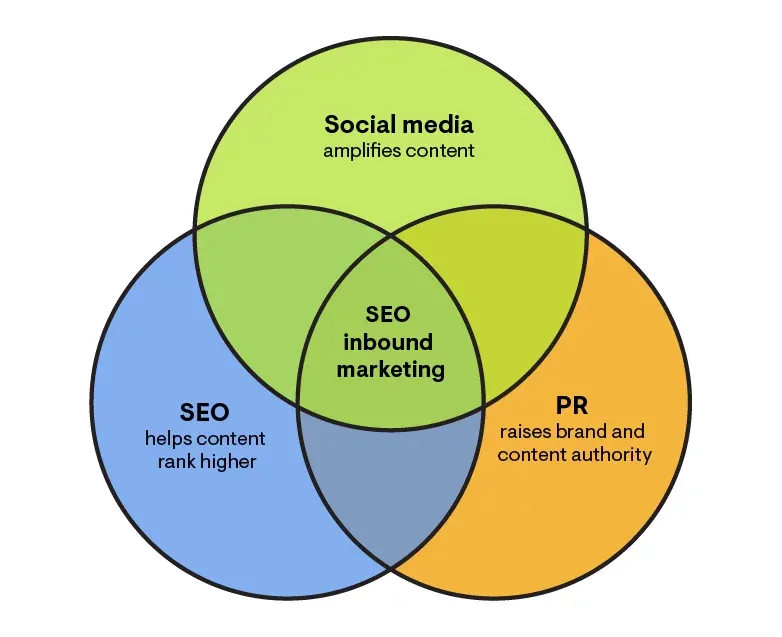
A standalone search strategy might generate millions of impressions without producing a single qualified lead. Conversely, a brilliant automated funnel is utterly useless if nobody can organically find your website. The true magic of SEO and inbound marketing lies in their symbiotic relationship, where traffic generation directly fuels lead capture.
Building a Modern SEO and Inbound Marketing Framework
Deploying a successful campaign requires moving beyond basic keyword stuffing and generic blog posts. A mature SEO and inbound marketing strategy relies on establishing deep topical authority and mapping content to specific user journeys. You must construct an ecosystem where technical health and compelling storytelling coexist seamlessly.
1. Search Intent and Audience Discovery
The foundation of any profitable campaign begins with mapping keyword data to actual buyer psychology. Do not target high-volume phrases blindly; instead, analyze the precise search intent behind every query. Someone searching “what is a CRM” requires completely different content than someone searching “enterprise CRM pricing comparison.”
By mapping intent accurately, you ensure top-of-funnel queries lead directly to educational guides. Middle-of-funnel queries should trigger comprehensive webinars, while bottom-of-funnel queries must drive directly to sales consultations. This alignment prevents high bounce rates and signals to search algorithms that your page satisfies the user’s ultimate goal.
2. Creating Pillar Content that Ranks and Converts
The days of publishing fragmented, 500-word blog posts to game search algorithms are permanently over. Today’s landscape requires comprehensive pillar pages that cover a core topic exhaustively while interlinking to supporting cluster content. This hub-and-spoke model demonstrates deep expertise to search crawlers while keeping users engaged on your site longer.
Google’s Helpful Content Guidelines mandate a strict adherence to Experience, Expertise, Authoritativeness, and Trustworthiness (EEAT). To satisfy these requirements, your content must feature original data, expert quotes, and unique perspectives that generic AI writers cannot replicate. This high standard of quality is the linchpin of long-term organic success.
Every pillar page must also feature strategically placed conversion mechanisms to fuel your lead engine. Embed relevant lead magnets, interactive widgets, or content upgrades seamlessly within the narrative text. The pillar page earns the organic traffic, while the embedded assets instantly capture the contact information.
3. Technical Foundation as a Growth Lever
A frictionless user experience represents the vital technical backbone of your digital presence. Search engines aggressively penalize slow, unsecure, or mobile-hostile websites, completely neutralizing your best content efforts. Core Web Vitals, clean URL structures, and logical site architecture are non-negotiable prerequisites for search visibility.
Technical health directly impacts your lead conversion rates just as much as your search rankings. A landing page that takes five seconds to load will lose nearly half of its potential prospects before they even see your form. Maintaining technical excellence ensures your digital investments are never bottlenecked by poor infrastructure.
Pros and Cons of a Unified SEO and Inbound Marketing Approach
While integrating these disciplines is highly effective, executives must understand the operational realities before committing resources. Approaching your SEO and inbound marketing with realistic expectations prevents premature pivot decisions and ensures long-term commitment.
Pros of Integration:
- Compounding ROI: Unlike paid advertising, organic assets continue generating leads long after the initial financial investment is made.
- Higher Lead Quality: Searchers actively looking for solutions are inherently more qualified than passive social media scrollers.
- Enhanced Brand Authority: Dominating search results while providing high-value resources establishes unshakeable industry trust.
- Data Synergy: Organic search data informs your lead nurturing topics, while sales questions heavily inform your keyword strategy.
Cons and Challenges:
- Resource Intensive: Requires cross-functional alignment between technical specialists, writers, developers, and automation experts.
- Delayed Gratification: It takes significant time for search algorithms to recognize authority and for automated funnels to mature.
- Constant Maintenance: Both search algorithms and buyer behaviors shift rapidly, requiring continuous optimization and content decay management.
5 Common Mistakes in SEO and Inbound Marketing
Misunderstanding the nuanced relationship between these complementary strategies routinely leads to wasted marketing budgets. Avoid these frequent execution pitfalls when scaling your SEO and inbound marketing operations.
1. Publishing Without Commercial Intent
Driving thousands of top-of-funnel visitors who have zero chance of buying your product is a massive drain on resources. Every piece of published content must have a logical next step that guides the user closer to a commercial decision.
2. Gating Content Too Early
Forcing users to fill out a form to access basic educational content creates unnecessary friction and prevents crawlers from indexing your best work. Keep top-of-funnel content open to build search authority, and only gate high-value, proprietary assets behind forms.
3. Ignoring Post-Click Lead Nurturing
Capturing an email address is only the very beginning of the customer acquisition process. Failing to deliver a personalized, automated email sequence immediately after conversion allows high-intent leads to turn completely cold.
4. Neglecting Internal Linking
Orphaned web pages generate no domain authority and provide terrible user navigation experiences. Strategic internal linking passes ranking power between pages while naturally guiding readers deeper into your digital funnel.
5. Siloing Marketing Teams
When search specialists and content creators do not communicate, you end up with highly optimized pages that nobody actually wants to read. Your organic strategists and lifecycle marketers must operate from the exact same brief and share identical KPIs.
Key Metrics to Measure SEO and Inbound Marketing Success
Tracking the right key performance indicators proves the financial viability of your campaigns to stakeholders. Move beyond vanity metrics and focus exclusively on numbers that directly impact pipeline revenue to prove your SEO and inbound marketing ROI.
- Organic Qualified Leads: Tracking raw traffic is insufficient; you must rigidly measure how many organic visitors convert into marketing qualified leads.
- Funnel Conversion Rates: Monitor the percentage of users moving from anonymous visitor to captured lead, and from lead to closed-won customer.
- Time-to-Close: A highly effective organic engine should noticeably decrease the length of your average sales cycle by pre-educating prospects.
- Content Revenue Attribution: Attribute closed revenue back to the specific landing pages and pillar posts that originally generated the initial organic click.
Actionable Steps to Launch Your SEO and Inbound Marketing Strategy
Executing a world-class playbook requires ruthless prioritization and tight operational alignment across your entire organization. Follow these immediate steps to construct your SEO and inbound marketing growth engine from the ground up.
Step 1: Conduct a Unified Content Audit
Map all existing website content against the buyer’s journey and current organic rankings. Identify orphaned pages, keyword cannibalization, and high-traffic posts that currently lack conversion forms. Consolidate underperforming pages to immediately boost overall domain authority and user experience.
Step 2: Build Your Lifecycle Funnel
Define exactly what resources a prospect requires at the awareness, consideration, and decision stages of their journey. Create targeted lead magnets for each stage, such as checklists for beginners and ROI calculators for late-stage buyers. Integrate these robust assets seamlessly into your highest-ranking web pages.
Step 3: Implement Automated Lead Routing
Configure your CRM to instantly route captured leads into specialized nurturing sequences based on the specific page they converted on. A user downloading a highly technical whitepaper requires a completely different follow-up email sequence than someone requesting a live software demo.
Step 4: Optimize for Information Gain
Search engines actively demote derivative content that simply repeats what already exists on the first page of results. Audit your planned topics to ensure you are introducing net-new concepts, proprietary data, or contrarian viewpoints. This relentless focus on information gain is what separates mediocre campaigns from world-class operations.
Step 5: Establish a Continuous Feedback Loop
Your frontline sales team speaks to customers daily, uncovering the exact language and objections prospects actively use. Feed this qualitative data directly back to your marketing teams to perpetually refine keyword targeting and content angles. This continuous loop ensures your strategy remains tightly aligned with real-world buyer behavior.
Final Thoughts on Sustainable Digital Growth
The future of digital acquisition belongs to brands that refuse to choose between search visibility and customer experience. By relentlessly executing SEO and inbound marketing together, you build an unassailable competitive moat. Your website seamlessly evolves from a static digital brochure into an intelligent system that predictably attracts, engages, and converts your ideal buyers.
Stop treating search optimization as a mere technical checklist and inbound strategy as a basic email sequence. Embrace them as two halves of the ultimate revenue-generating whole. Invest in this integrated methodology today, and watch your organic pipeline scale exponentially for years to come.